Why We Chase the Abyss
Or: Why I Keep Walking Into the Fog When I Say I Want Clarity

Let’s start with the obvious problem.
We are a species that builds telescopes to peer at light that left its source before we existed. We write philosophies to interrogate consciousness. We have developed, over several thousand years, an elaborate and largely successful project called understanding things — and it has produced antibiotics, symphonies, and the ability to order a burrito at 2am without speaking to another human being.
And then, alongside all of that, we have consistently, enthusiastically, across every culture that has ever left a record — gotten out of our heads on purpose.
Soma in the Vedic tradition. Kykeon at the Eleusinian Mysteries. Ayahuasca in the Amazon. The shaman’s trance. The mystic’s dark night. The Sufi’s ecstatic dissolution. Rhythmic drumming until the self goes quiet. Fasting until visions arrive. Prayer sustained past the point of meaning into something that isn’t prayer anymore.
Historians debate the specifics. The chemistry of kykeon remains contested. What exactly the initiates at Eleusis experienced is, pointedly, a mystery — partly by design, since initiates were forbidden to disclose it on pain of death, which suggests the Greeks understood that some things are better left unverifiable.
But the pattern is not debatable. Deliberately crossing into non-ordinary states of consciousness is not a modern aberration or a countercultural hobby. It is one of the oldest things we do. It may predate agriculture. It almost certainly predates writing.
Which means that for the entirety of recorded history, human beings have been doing two things simultaneously: building better tools to understand reality, and building better tools to temporarily escape the version of reality those tools reveal.
The question is not whether this is strange. (It obviously is.) The question is why a species this obsessed with clarity keeps choosing the fog.
The easy answer is escapism. And the easy answer, as usual, is wrong — or at least radically incomplete. Because if you look closely at which fog we choose, and when, and why, something more interesting emerges.
We are not fleeing the world. We are hungry for something the ordinary world cannot seem to provide. And to understand what that something is, you need to understand the organ doing the seeking.
The Brain That Cannot Stop Predicting
Here is something your brain is doing right now, without your permission or awareness: it is generating a model of the world and checking incoming sensory data against that model, updating the model when reality fails to cooperate, and then — this is the part most people find unsettling when they first encounter it — constructing your experience of the present moment largely from the model rather than from reality itself.
You are not perceiving the world. You are perceiving your brain’s best guess about the world, continuously revised.
This framework — predictive processing, in the academic literature — has become one of the more compelling accounts of how cognition works. It explains optical illusions: the model wins even when you know it’s wrong. It explains phantom limb pain: the model includes the limb; the missing limb sends no data to correct it; the brain, reasonably, concludes the limb is still there and hurting. It explains why grief can feel physically like an amputation: the brain has spent years building a model that includes a specific person, and that person has now become a prediction that returns only errors.
What it also explains is something nobody puts in the brochure about mystical experience.
The brain’s prediction machinery runs on error signals. When predictions are confirmed, the brain learns approximately nothing— confirmed expectations produce a modest, almost indifferent neural response. What commands full attention, what triggers the motivational circuits, what releases dopamine into the systems associated with learning and directed action, is the unexpected. The prediction error. The thing that didn’t fit the model.
Dopamine has been called the pleasure chemical for decades, and this is wrong in the specific way that pop neuroscience tends to be wrong: accurate enough to feel like information, misleading enough to actually be the opposite of it. Dopamine does not signal pleasure. It signals prediction error — the gap between what was modeled and what arrived. A reward that was expected produces almost no dopamine response. An unexpected reward produces a burst. A predicted reward that fails to arrive causes dopamine to drop below baseline — which is why disappointment feels worse than having wanted nothing.
What dopamine actually encodes is the announcement that something is more — or less — than the model anticipated. It is, in essence, the brain’s way of saying: pay attention here, something is being learned.
Now. What does a state of genuine mystery do to a brain organized around prediction?
It floods it with prediction errors it cannot resolve.
The quality that people reliably describe in altered states — the sense that ordinary things contain hidden depths, that symbols are speaking across time and culture, that the borders between self and world are more permeable than they seemed — is not metaphor pretending to be neuroscience. It reflects a brain whose prediction hierarchies have been temporarily reconfigured. The usual flow of information, from high-level expectation down to raw sensation, becomes disordered. The model loosens its grip on experience. The gap between what was expected and what arrives expands dramatically.
And into that gap floods something that feels, to the person experiencing it, overwhelmingly like significance.
The question worth sitting with — and this is the question the traditions never stop asking, in their various idioms — is whether that significance is discovered or manufactured.
Pattern Recognition and Its Discontents
The human brain is, among its many impressive qualities, a pattern-recognition system of almost embarrassing eagerness.
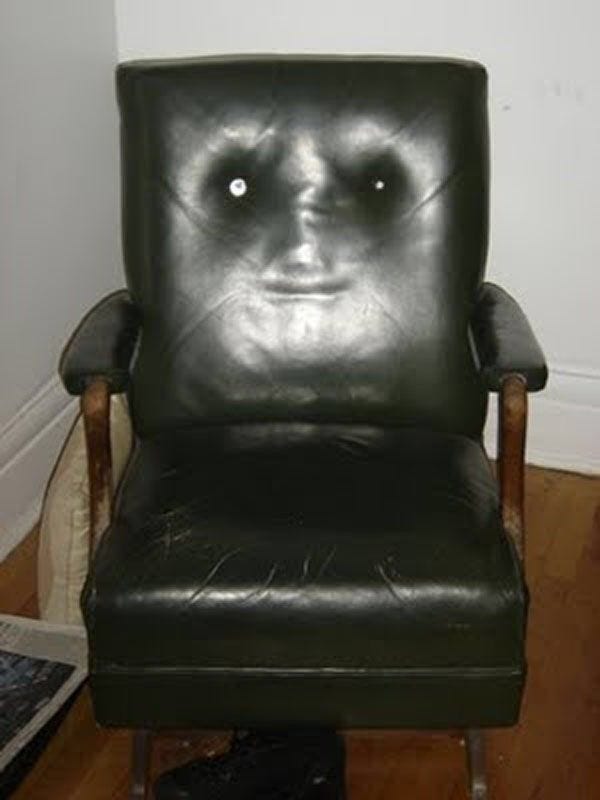
Pareidolia is the technical name for seeing faces in clouds, animals in ceiling stains, the Virgin Mary in a grilled cheese sandwich. It is not a malfunction. It is an overcalibrated feature of a system that, during the long evolutionary millennia when it was being built, faced a specific asymmetric risk: the cost of not detecting a pattern — missing the predator in the dappled light — was catastrophic and irreversible. The cost of falsely detecting one was merely embarrassing. Evolution, being a ruthless accountant, therefore built brains that overcall. We are descended from the people who saw tigers in every shadow, not from the skeptics who waited for more data and were eaten.
The consequence, which we are still living with, is that the brain will enthusiastically perceive meaning, connection, and significance in data that contains none. This tendency (which is called apophenia when it refers to the general habit of perceiving connections between unrelated things) — sits on a spectrum. At mild intensities, it is the substrate of creativity, metaphor, and most of what we call insight. At more extreme intensities, it begins to resemble psychosis. And certain altered states — reliably, consistently, across many research contexts — push people along that spectrum in directions that feel, from the inside, exactly like revelation.
William James, writing in 1902, identified what he called the noetic quality of mystical experience: the sense of having gained genuine knowledge that does not require external verification because the knowledge announces itself with an authority that feels self-evident (Unverified Personal Gnosis, anyone?). Contemporary psilocybin research at Johns Hopkins and Imperial College London has reliably produced experiences that subjects rate as among the most meaningful of their lives — more significant, some report, than the birth of a child, or the death of a parent.
Whether that meaning reflects genuine insight, profound emotional reorganization, or the particular neural architecture of the drug experience itself is, to put it mildly, still being debated.
The brain, in altered states, is not neutral. It is a pattern-hungry system that has been handed a kaleidoscope and asked to report on reality.
Some of what it sees is real. Some of it is the kaleidoscope.
The difficulty — which every serious mystical tradition, without exception, has identified as the central difficulty — is that from the inside, these two things are nearly indistinguishable. A thought arrives in an altered state carrying the full gravitational weight of cosmic certainty. It feels different from ordinary thought in exactly the way a genuine discovery is supposed to feel different. The hands reach for a notebook.
By morning, the thought is either gone entirely, or it is still there but ordinary — a reasonable observation with the lights turned up, not a cosmic one. The revelation was the feeling of insight. The glow without the fire. The announcement without the content.
This is the oldest trap in the history of mystical seeking. It has swallowed prophets, philosophers, and an incalculable number of people who had very important realizations while high that turned out to be about how connected everything is.
Why Some of Us Like the Dark…With Science!
Not everyone is equally drawn to the threshold.
Personality research has, over several decades, converged on a robust trait called openness to experience — a dimension along which people vary considerably, and which predicts, among other things, sensitivity to beauty, tolerance for ambiguity, interest in ideas, and the tendency to seek out novel and unconventional states of mind. People high in openness are more likely to report mystical experiences, more likely to find certain kinds of uncertainty pleasurable rather than aversive, and — this is where it gets interesting — seem to have a higher appetite for the particular neural state that attends being wrong.
Meaning — they like prediction errors. Or at least, they tolerate them better than most.
There is also a cognitive phenomenon called the Zeigarnik effect, which describes the brain’s tendency to retain and return to unfinished tasks far more persistently than completed ones. The open loop remains active in working memory, nagging for resolution. This is why you remember the name you couldn’t recall the moment you stop trying to recall it. It is also, at a deeper level, why certain kinds of unresolved mystery have more grip on the psyche than resolved ones. The universe is more interesting when it still has an unanswered question in it. The story is more compelling before it ends.
The liminal state — the threshold, the space between categories — exploits all of this simultaneously. It is, by definition, unresolved. It sits between the known and the unknown, between the self and whatever the self might become. Van Gennep, the anthropologist who first formalized the structure of rites of passage, described a three-part sequence that appears with remarkable consistency across cultures: separation from the ordinary world, a liminal period of dissolution, and reincorporation — the return to ordinary life, altered. The middle phase, the dissolution, is the one that every tradition treats with elaborate care. Not because it is dangerous, exactly, but because it is magnetic. People get stuck there.
Modern neuroscience has begun to map the mechanism. In altered states, the default mode network — the set of brain regions associated with self-referential thought, the narrative of who you are and what your life means — becomes less active. The usual self-enclosed loop quiets. What emerges in its place is a mode of processing that is less filtered, less organized by prior categories, more open to unexpected connections. The world, from inside that state, becomes genuinely strange again.
Whether what is encountered in that strangeness is truth, or projection, or an argument for both simultaneously, is a question that nobody has answered to universal satisfaction — which is, when you think about it, itself a fairly liminal situation to be in.
The Hero Never Lives in the Underworld
Every mythology worth its salt contains a descent.
Orpheus into Hades. Inanna through the seven gates, surrendering something at each threshold until she arrives utterly stripped. Odysseus to the land of the dead to speak with Tiresias, the blind prophet who turns out to be the only one still worth consulting. Dante through all nine circles, guided by a poet who cannot enter paradise himself.
The hero goes down because something necessary waits there. Some knowledge that cannot be acquired on the surface. Some part of the self that has been sent below and must be retrieved before the life above can be fully inhabited.
But the structure of every worthwhile descent contains one non-negotiable element.
The hero returns.
Carl Jung, who spent a significant portion of his professional life in the productive neighborhood of the underground, was very clear on this point. The unconscious — with its archetypes, its symbols, its insistent and often inconvenient grammar — is not the enemy of consciousness. It is its necessary counterpart. The work of genuine psychological maturation involves going down there, encountering what has been repressed or disowned or simply left in the dark, and bringing it back in a form that can be integrated into waking life.
But Jung was equally clear, and somewhat more urgent, about what he called psychic inflation: the state in which a person becomes so identified with the depths — with symbols and archetypes and the oceanic sense of cosmic significance — that they lose their functional relationship to ordinary reality. This is not enlightenment. This is a different problem with better aesthetics.
The shaman who enters the spirit world is expected to come back with something. The vision quest ends. The initiates at Eleusis returned to Athens and presumably resumed their lives — slightly altered, hopefully wiser, possibly still not entirely sure what had happened to them. The dark night of the soul, in the Christian contemplative tradition, is not a destination. It is a passage.
The ocean is not the enemy. The invitation is to sail it.
Not to build a house on the seafloor and insist you’ve found the only interesting place to live.
The Attachment We Don’t Name
Here is where the discourse tends to become either moralistic or naive, so let’s try to be neither.
When we talk about addiction, we typically reach for the pharmacological frame: tolerance, withdrawal, hijacked dopamine pathways, the reward system running its motivational circuits toward a substance instead of toward the things evolution intended. This frame is not wrong. But it is, increasingly, understood to be incomplete in ways that matter.
The neuroscientist Jaak Panksepp spent decades studying what he identified as the SEEKING system — a fundamental motivational circuit that drives not pleasure but anticipation: the oriented movement toward something not yet possessed. SEEKING, in Panksepp’s framework, is primary. It precedes reward. It is the engine of curiosity, exploration, and the peculiar human tendency to keep looking for something even after finding it.
And what contemporary addiction research has increasingly come to understand is that people do not become attached only to substances. They become attached to states. To the feeling of novelty. To uncertainty itself. To the particular quality of consciousness that attends seeking — that forward-leaning, dopaminergically activated, prediction-error-saturated state of being on the way toward something.
The SEEKING system, it turns out, is not especially interested in arrival. It is built for the approach.
This reframes a significant portion of what gets called spiritual seeking in ways that are simultaneously more sympathetic and more uncomfortable. The person who moves compulsively from one transformative framework to the next, who feels most alive at the threshold and most restless in resolution, who requires a constant supply of novelty and revelation and cosmic significance — may not primarily be seeking truth. They may be attached to the architecture of seeking itself. To the particular neural state that attends standing at the edge of the unknown.
Which would mean the abyss is not a destination. It is a drug.
This is not a moral judgment. The SEEKING system evolved because oriented curiosity toward the unknown was, for millions of years, adaptive. The problem arises when the system becomes self-referential — when the search is calibrated not toward genuine discovery but toward the maintenance of its own activation. When the feeling of being about to understand something becomes more valuable than actually understanding it. When the glow is consistently preferred to the fire.
Psychologists call the motivated avoidance of difficult internal experience experiential avoidance. Altered states and mystical seeking can serve this function with remarkable efficiency and considerable self-flattery. It is genuinely difficult, from the inside, to distinguish between a descent undertaken in the service of genuine transformation and one undertaken in the service of not having to sit with the specific difficult thing that is waiting in the ordinary light of an ordinary Tuesday.
The mystic’s trap and the addict’s trap have, at their core, the same architecture: a feedback loop in which the process of seeking has become more rewarding than anything the seeking might actually find.
What We Actually Want
Perhaps the most honest thing to say about the human relationship to mystery is this: we have consistently claimed to want clarity while organizing significant portions of our lives around the avoidance of it.
And not because we are dishonest. Because the clarity we say we want is not actually the clarity we want.
There is a version of clarity that resolves mystery by eliminating it. The fully explained thing. The question that, once answered, stops being interesting. The universe rendered legible and therefore smaller. The fully explained thing has a specific quality — technically complete, something vital missing — like a taxidermied animal that perfectly replicates the form of a living one while containing nothing that actually moves.
What the serious seeker — the astronomer, the philosopher, the contemplative, the scientist who cannot stop asking the next question — actually wants is something the vocabulary of clarity does not quite capture. Not the resolution of mystery. The deepening of it. Understanding that opens onto a larger room. Answers that reveal better questions. Revelation that is not an endpoint but a more precise view of how far there still is to go.
This is what the astronomer feels when the new galaxy appears at the edge of the telescope’s range: not satisfaction, but a more astonishing problem. This is what the philosopher feels when the answer finally arrives and immediately generates ten more questions, patient and alive in the dark. This is what the contemplative describes after touching what the traditions call the divine: not arrival, but the sudden precise recognition of how barely the journey has begun.
Mystery, under genuine inquiry, does not shrink. It deepens. It becomes more specific and therefore more strange.
The fear underneath much of the seeking — the fear that rarely gets spoken directly — is that clarity might be a kind of closing. That to understand something completely is to be finished with it. That the explained universe is a reduced one.
But this fear is based on a mistaken model of what understanding actually does. The history of human knowledge is not a history of the world becoming simpler. It is a history of the world becoming more intricate, more layered, more precisely astonishing, at every scale at which we have learned to look.
We have not been protecting mystery from clarity. We have been protecting it from a counterfeit clarity — the kind that explains in order to dismiss, rather than illuminates in order to see more clearly.
The difference is everything.
The Descent That Changes You
Every generation inherits the same question.
Are we entering the forest to discover something — or because we have quietly decided we prefer the forest to wherever we were before?
Neither answer is automatically shameful. The psyche sometimes genuinely requires dissolution more than direction. Wandering serves functions that goal-directed movement cannot. The traditions that took the descent seriously were not wrong about this. Some forms of growth cannot be achieved through effort, only through a kind of productive unknowing — through sitting in the dark long enough for something to shift that could not have been shifted in the light.
But a civilization — or an individual — that enters the forest every night and returns with nothing except the memory of beautiful thoughts, thoughts that dissolve by morning, that leave no trace, transform nothing, and inform no decision about how to actually live —
Is no longer seeking wisdom.
It is, with some sophistication, avoiding Tuesday.
The difference between a genuine descent and an extended residency in the depths is not always visible from the inside. This is precisely why every tradition that took the descent seriously also built structures for the return: teachers, communities, ethical frameworks, practices that grounded the experience in something that could be tested against life. Not to prevent the descent, but to ensure that whatever was found there could be brought back up and made real.
Integration is the part the SEEKING system finds least interesting. The anticipatory activation belongs to the approach, not the arrival. There is no dopamine burst for patient and unglamorous work. For sitting down on an ordinary morning and asking, without the benefit of any altered state, what you are actually going to do differently now.
That is the work. And it is harder than the descent, which is seductive, and more demanding than the abyss, which requires nothing of you except your presence.
This may be why wisdom has always been rare. Not because the forest is inaccessible. The forest is extremely accessible, and has been throughout history, and people have been going there constantly. What is rare is the return — and the discipline to carry something back into a world that will not automatically recognize it, and to make it real there, in the ordinary light.
The Real Goal
For most of human history, the implicit assumption has been that the opposite of mystery is clarity.
It isn’t.
The opposite of mystery is certainty. And certainty, as any honest encounter with the history of human knowledge should suggest, is less a destination than a resting place for the intellectually exhausted. It is what you claim when you’ve stopped looking.
Wisdom is something different from both. It is not clarity and not certainty and not the sustained experience of cosmic significance. It is the capacity to descend without losing the thread back. To sit inside the unknown without rearranging the furniture and calling it home. To let the dissolution do what it is there to do — and then to carry whatever was genuinely found back up into the light, where it can be tested against reality and transformed into something a life can actually be built on.
What the neuroscience and the mythology and the philosophy all point toward, from their different angles, is the same structure: the descent is real, the things found in darkness are real, and neither of these facts is the point. The point is the return. The fire you bring back. What you do with it in the morning.
That has always been the invitation. Not a life without mystery — a world where mystery is something that happens to you and then passes through you and changes the shape of what you are. Not transcendence as a permanent address. As a passage.
The horizon does not close under genuine inquiry. It moves. The questions become more precise, more strange, more specifically astonishing than the blurred general wonder that preceded them. The abyss is real. What waits at the bottom is real. And wisdom, in the end, is simply the willingness to go down there with enough rigor to actually learn something — and enough love for the surface world to come back.
We are, as a species and as individuals, still working on both.
The fog will always be there. The question is what you bring back from it.
I enjoyed this, thank you.
You focus mainly on scientists, philosophers, and contemplatives, but I think the advice applies to artists and creatives as well. We can’t make our home in the depths, exciting and inflating as they may be. We must return from the descent and use our particular craft (painting, storytelling, music, etc.) to translate the experience and share what we have found with an audience. For an artist, integrating material from altered states of consciousness, like Waking Dreams, means precisely making the experience concrete in the form of an artwork/opus. If that artwork connects with an audience (at some point) it means that the experience had some shareable truth to it, and wasn’t just a private, delusional reverie. Hilma af Klint’s visionary paintings are a good example.