Nothing You Feel Is Random (But It Is Not All True Either)
How to Decode Emotional Signals Without Turning Your Mind Into a Myth Machine

There is a version of your inner life you were never taught to read. Not because it is hidden. Because no one gave you the correct model of what it is.
Most people are handed two bad options and told to choose. Either your emotions are meaningless noise you should push through and override, or they are deep truth you should follow without question. Both are wrong. Your emotional life is not noise, and it is not prophecy. It is a prediction system. Once you understand that, everything changes — not because your emotions disappear — but because you stop confusing signals for facts.
Emotions Are Predictions, Not Verdicts
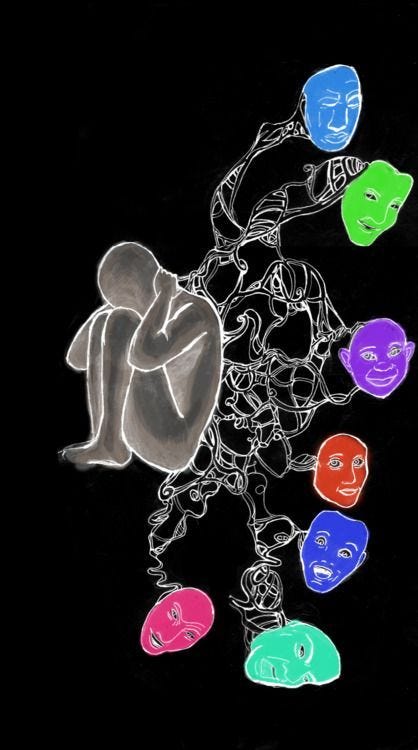
Every emotional state is generated by a single process: your nervous system predicts what is happening or about to happen, based on everything it has learned. That prediction produces a bodily output we call feeling.
Anxiety is a predicted threat or loss of control.
Attraction is a predicted reward or alignment.
Shame is a predicted social rejection or status drop.
Irritation is a predicted interference with a goal.
Emotional flatness is low predicted reward, low salience.
None of these are mystical messages. They are compressed forecasts. And like all forecasts, they can be accurate, outdated, overgeneralized, or completely wrong about the current environment.
The Critical Mistake
Modern spiritual culture quietly encourages emotional literalism. The operating assumption is that if you feel something, it must mean something true. Your body knows. Trust the signal.
The nervous system does not operate as a truth engine. It operates as a survival model. It answers one question: based on everything I have learned, what do I think is about to happen?
Your emotional response is often shaped more by history than by what is in front of you.
A present moment can be entirely safe while still feeling dangerous. A relationship can be stable while still triggering abandonment alarms. An opportunity can be genuinely good while still activating learned fear of visibility or success. This is prediction lag. The architecture is running old data through a current situation.
The Structure Beneath the Signal
Every emotional event contains four layers, and most people only ever see one.
